Everyone asks your parent if they've eaten. Who asks if they're lonely?
 HeyVini team · · 3 min read
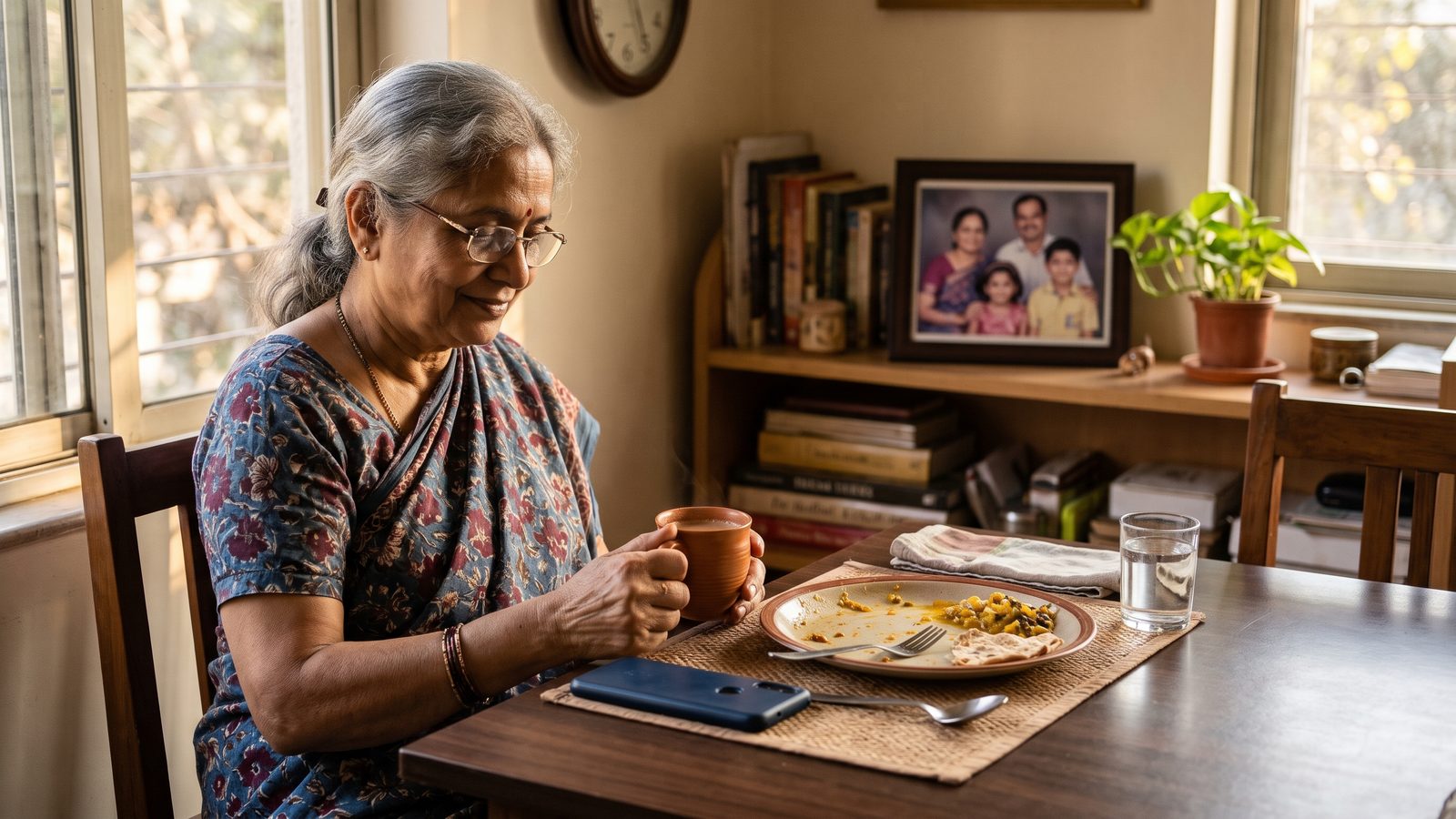
Here's a day your parent might never describe on the phone.
The morning is busy enough. Tea, the news, a walk to the shop. Lunch is done by one. Then the afternoon starts, and it's long. The house is quiet. The phone sits on the table, and every time it buzzes, they hope it's you.
When you do call, the first question is usually "Have you eaten?" They say yes. You say good. Then it's medicines, the electricity bill, the doctor on Thursday. Ten minutes, and you both hang up feeling like you checked in.
But nobody asked how the afternoon felt.
The quiet part of the day
Loneliness is more common than most families think. The World Health Organization says loneliness and social isolation affect about a quarter of older people, and it names them as key risk factors for mental health conditions later in life.
Your parent may never use that word, though. "Lonely" can sound like a complaint, or like they're asking you to come home. So they say "I'm fine" and talk about the weather. Then they wait for the next call.
When every call becomes a checklist
I get why it happens. You're far away, you have ten minutes between meetings, and the practical stuff feels like the useful part. Did they take the tablet? Did the plumber come?
Those things matter. But if every call is a checklist, your parent slowly turns into a list of tasks, and you turn into the person who manages it. Neither of you signed up for that.
The fix isn't a longer call. It's a different one.
- 1About their day
"What was the best part of today?" "Who did you talk to?"
- 2About their opinion
"What do you think about..." The news, a recipe, your new job. Anything.
- 3About the past
"What were you doing at my age?" Then let them run with it.
- 4About what's next
"What do you want to do this month?" Small plans count.
Ask about them, not just their tasks
Try opening with one of those questions before anything practical. The call feels different straight away. Your parent talks more. Sometimes the real stuff comes out on its own, halfway through a story about the neighbour.
Listen for the small signals too. Shorter answers than usual. "Nothing much happened." Going out less. You don't have to turn it into a big talk. Just notice, and ask again next time.
If your parent seems low for more than a couple of weeks, gently suggest they talk to their doctor. Loneliness and low mood are worth taking seriously, and a doctor can help.
Let something else carry the checklist
This is the part HeyVini was built for. Vini sends your parent a daily check-in and medicine reminders on WhatsApp or Telegram. If a check-in goes unanswered, or your parent says they're not feeling well, the family gets a nudge.
That takes the tablets and the bills off your call. What's left is the conversation, which is the part your parent was waiting for anyway.
Questions you might be asking
How do I know if my parent is lonely
They may not say it directly. Watch for shorter answers, going out less, losing interest in things they used to enjoy, or calls that always end quickly. Ask open questions about their day and really listen.
What should I talk about with my parent on the phone
Start with them, not tasks. Ask about the best part of their day, their opinion on something, a memory or a plan for the week. Leave the practical things for the end of the call.
Is loneliness in parents a health issue
It can be. The World Health Organization lists loneliness and social isolation as key risk factors for mental health conditions later in life. If your parent seems low for a while, encourage them to talk to their doctor.
Keep reading
Sudden confusion in an older parent needs urgent help
Sudden confusion in an older parent needs urgent medical help. Learn why a UTI is only one possible cause and what details to share with clinicians.
3 min read
Five things to notice when visiting aging parents after time away
Visiting after months away can bring questions. Notice daily routines, ask before changing things and discuss concerns without inspecting the house.
3 min readWritten by the HeyVini team. Drawn from what caregivers tell us, checked against caregiving and medical guidance.