The things you can't see on a video call with your parent
 HeyVini team · · 3 min read

Your parent looks great on the video call. Hair done, big smile, the living room tidy behind them. "All good here!"
And maybe it is. But a video call is a frame. It shows you a face and a corner of a room for fifteen minutes. A lot of everyday life happens outside that frame.
What the frame doesn't show
Parents often tidy up, sit somewhere with good light and put on their best face for the call. That's natural. Nobody wants to worry their kid.
What you don't see might be the stack of unopened post, a fridge that's mostly empty, the walk they've quietly stopped taking, or the long hours between calls.
Why "How are you?" doesn't get the real answer
"How are you?" has a reflex answer: "Fine." "Are you eating properly?" gets "Yes, of course." Direct questions about problems make parents defensive, or protective of you.
Questions about their day tend to bring out the real picture, without anyone feeling checked on.
- 1"What did you cook today?"
Tells you whether they're eating and getting to the shops.
- 2"Did you go out this week?"
Walks, the market, friends. A sign of energy and mood.
- 3"Show me your plants"
A gentle way to see more of the home, if they're happy to.
- 4"Who did you talk to today?"
Tells you whether the day had people in it.
Listen for changes, not one-offs
One quiet day means nothing. A pattern means something. Shorter answers every call, no longer mentioning friends, the same meal every day, sleeping a lot in the afternoon. Note it kindly, and ask again next week.
If you notice something that worries you, like falls, confusion or a big change in eating, talk to your parent and encourage them to see their doctor. If anything comes on suddenly, get medical help straight away.
Calls aren't the same as company
There's one more thing a screen can't do. A 2024 study from the University of Texas at Austin and the University of Michigan followed more than 300 people over 65 through their days. Only in-person contact was linked to feeling less lonely. Phone calls and texting didn't have the same effect, and even a chat in person with an acquaintance helped more than a phone call with someone close.
That isn't a reason to call less. It's a reason to help your parent have people nearby too: a neighbour, a weekly lunch, a class.
Fill the gaps between calls
A video call once or twice a week leaves a lot of days in between. That's where HeyVini helps. Vini sends your parent a short check-in every morning on WhatsApp or Telegram, and they reply in their own words. If they don't reply within the hour, or they say they're not feeling well, the family gets a nudge.
It doesn't show you more of the room. It just means you're not relying on one fifteen-minute frame to know how the week is going.
Questions you might be asking
How can I tell if my parent is struggling when we only talk on video
Ask specific questions about their routine, like meals, outings and who they spoke to, and watch for changes over several calls rather than one.
What questions should I ask my parent to know how they're really doing
Try "What did you cook today?", "Did you go out this week?" and "Who did you talk to today?" They feel like conversation, not a check.
What signs mean my parent needs more help
Repeated changes like eating less, going out less, falls, confusion or unopened bills. If something sudden or serious happens, get medical help straight away.
Keep reading
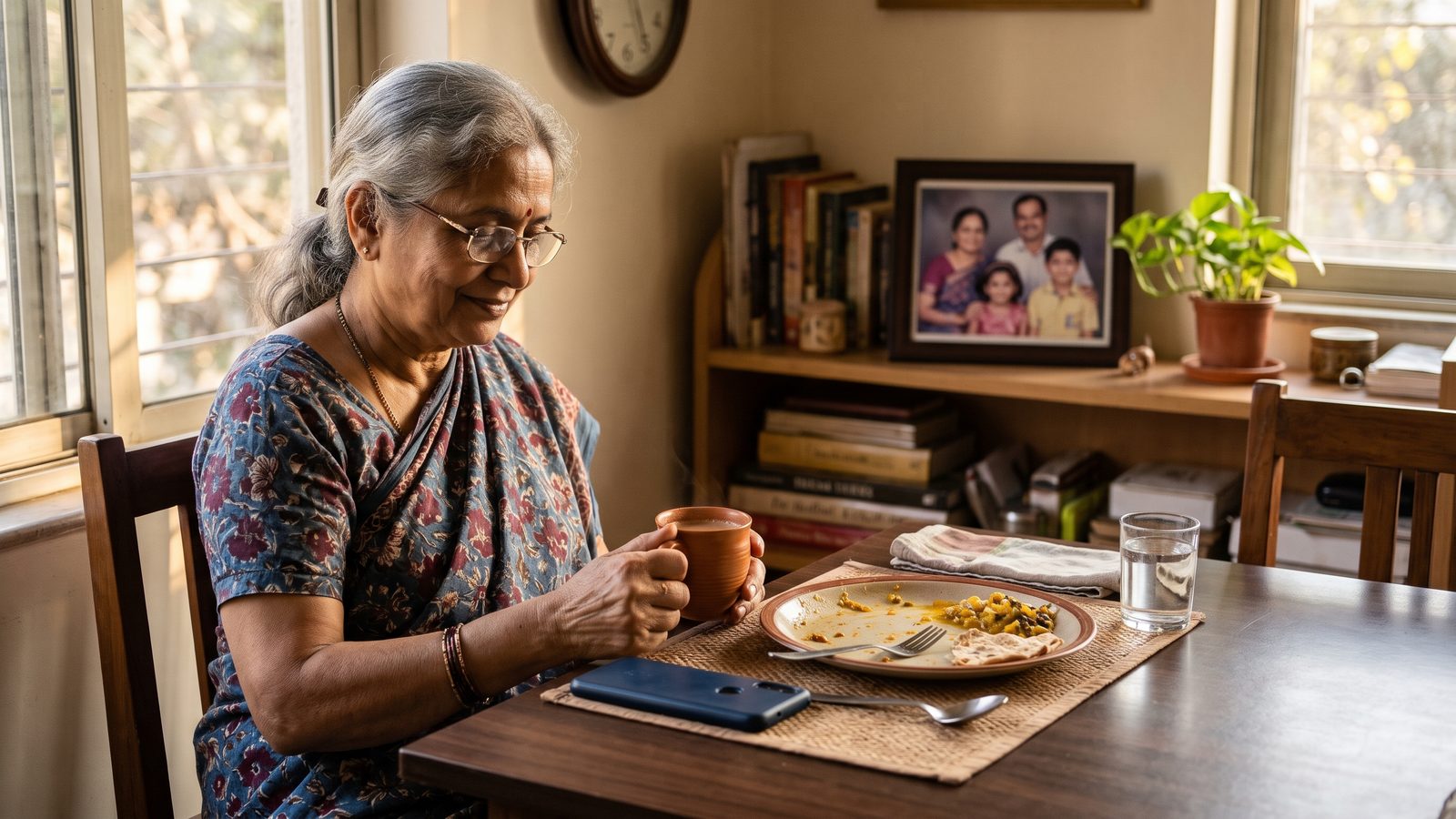
Everyone asks your parent if they've eaten. Who asks if they're lonely?
Many parents who live alone feel lonely and won't say it on the phone. Why calls turn into checklists, and questions that make room for real conversation.
3 min read
Sudden confusion in an older parent needs urgent help
Sudden confusion in an older parent needs urgent medical help. Learn why a UTI is only one possible cause and what details to share with clinicians.
3 min readWritten by the HeyVini team. Drawn from what caregivers tell us, checked against caregiving and medical guidance.